Review: Watermarks: Life, Death and Swimming by Lenka Janiurek (2020) #Watermarks @LenkaJ12 @AllisonandBusby @EmmaFinnigan @damppebbles #damppebblesblogtours

I am really excited to share my thoughts on this moving and beautifully written memoir by Lenka Janiurek. Many thanks to Emma at Damp Pebbles for my spot on the blog tour, and to Emma Finnigan and Allison and Busby for providing me with a proof copy of the book in exchange for an honest review.

Book Blurb:

Lenka Janiurek’s story really begins with the death of her mother when she was nine. She is the daughter of a Polish immigrant father, and one of eight children. Across the years she is plagued by the rage, addiction and despair of the controlling men she is closest to. This memoir grapples with identity, of trying to find a place in a world and within a family, that don’t feel like your own.

This remarkable story from the 1960s to the present day, describes the loss of her mother to her relationships with 2 stepmothers, early success as a playwright, extensive travel, and encounters with both extreme wealth and poverty. Throughout Lenka explores and celebrates the beauty and tragedy of living life to the full.

Watermarks is a stunning evocation of alienation, searching, and the restorative power of nature.

Review:

Truth, the old saying goes, is stranger than fiction, and one of the main things that struck me about Lenka Janiurek’s compelling memoir is what an utterly unique journey she has had. If this were a novel, you might begin to think that no protagonist could undergo so many transformative experiences, both painful and healing, but the depth of emotion and honesty that Janiurek reveals in this remarkable story could only come through lived experience. The other thing that is clear from the outset of the book is her talent with words. Her prose style is lean and supple, and wonderfully descriptive, and I was drawn in right from the opening passages. The use of the present tense creates a sense not so much of remembering but of reliving, and it is immensely powerful. I was captivated by her story, following Lenka through her life as she negotiates the ebbs and flows of her curious and difficult path, immersed in her beautiful words.

There are many different elements to Lenka’s story, and I don’t want to divulge too much information in this review, as one of the joys of reading a memoir by someone whose life story is not common knowledge is discovering its twists and turns for yourself. Suffice it to say that plenty happens in this book: childhood loss, early success, unhappy relationships, travel, motherhood, spiritual and artistic exploration – the list goes on. I doubt Janiurek ever had the problem that many of us would encounter on considering whether to write our memoirs: “But what on earth would I write about?”

Losing her mother at such a young age is obviously a pivotal moment for Lenka, but what follows is far from a universal story of grief. The idiosyncracies of her scattered upbringing are brought to life through the disorientating but effective jumps in time and location that occur in the spaces between the chapters. This technique creates the sense of rootlessness, of contradictions, and a kind of desperate searching that seems to me to be at the heart of her book. She veers between places and situations in a way that reminded me of theatrical scene changes: when the lights come up on the stage of each new chapter, we are often in entirely new surroundings. From lavish country mansions to basic lodgings, from luxury to only the necessities, Lenka’s story is one of contrasts. The one constant is swimming: water is her element, it is where she feels most at home, and her descriptions of wild swimming in beautiful locations are stunning.

While the narrative drifts in an almost dream-like way from location to location, it is rooted by Janiurek’s sharp, clear-eyed prose. Her language is spare and piercing; the nouns anchor her descriptions in reality: stones, water, buildings, places. As a reader, I felt as if I was seeing through her eyes, which is surely the sign of an incredibly effective memoir. There is a raw honesty here that is brave and deeply moving, but it is tempered by what I came to see as a really strong sense of respect, both for herself and for others: whether she is grappling with her spiritual side (which she approaches with a dose of cynicism, even as she joins a guru in India and free-thinking camps of hippie artists) or examining her fraught relationships with troubled men, it is her story she is telling, not that of her family members or her destructive partners. This is emphasised by the fact that the men in her life are referred to euphemistically, as ‘the tall man’ and so on; the story is not about them, it is about her, and she never attempts to infer the thoughts or feelings of others. There is nothing intrusive about this memoir in terms of those surrounding her – even the men who might seem to deserve harsher treatment in the narrative are not given that power over her story, and this left me full of admiration in ways that I am still thinking about.

Watermarks is an appropriately immersive experience; a dive into a bright, original consciousness whose lived experiences are uniquely and beautifully described. It was a pleasure to see the world through Lenka’s eyes, and I would highly recommend this book to anyone who is interested in exploring different ways of being. It is a thoughtful, honest, at times almost meditative book, and it had a profound impact on me as a reader. I am grateful that she chose to share her incredible story.

About Lenka Janiurek:

LENKA JANIUREK was born in York. At the age of 17 she won the prestigious Young Writer’s Competition at the Royal Court Theatre and subsequently had three plays on at the Royal Court Theatre, a platform play at the National Theatre, and one at the Other Place with the RSC in Stratford-on-Avon. She has facilitated workshops in writing, drama, art and well-being, in schools, colleges, at camps, and in a women’s prison. And worked as a baker, fundraiser, caretaker, green builder and researcher. She has four children. She lives close to the sea in Wales.

Social Media

Twitter: @LenkaJ12

Purchase Links:

Amazon UK: https://www.amazon.co.uk/Watermarks-Death-Swimming-Lenka-Janiurek-ebook/dp/B07YVQJ74K/ref=tmm_kin_swatch_0?_encoding=UTF8&qid=1588939919&sr=8-7

Waterstones: https://www.waterstones.com/book/watermarks/lenka-janiurek/9780749025953

Foyles: https://www.foyles.co.uk/witem/biography/watermarks-life-death-and-swimming,lenka-janiurek-9780749025953

Hive.co.uk: https://www.hive.co.uk/Product/Lenka-Janiurek/Watermarks–Life-Death-and-Swimming/24757566

Review: You Will Be Safe Here by Damian Barr (2019)

First of all, there is a bit of a backstory to how I ended up reading this book this month, and since, to misquote Lesley Gore, it’s my blog, and I’ll share if I want to (share if I want to), do please indulge me. In terms of obtaining my physical copy of the book, it was a perfect example of everything I love about Bookish Twitter. I’ve only been active on Twitter for a few months, despite signing up 5 years ago (it seems I signed up and then forgot about it, which may have had something to do with the two small humans who have joined us in the meantime), and it has been a joyous revelation of tribe-finding. Honestly, I love it. And so, briefly: as part of the Stay At Home Litfest, the wonderful @writerlynds ran a competition for a ‘tweet story’, I was one of the winners, and the prize was a book of my choosing. You Will Be Safe Here had been on my radar for a while, and a brilliant review by Ellie (Number 1!) @ReadtoRamble sealed the deal.

I promise I will get to the actual book in a second; I just want to share why this book attracted me. I spent part of my childhood in Namibia, and we visited South Africa often as a family, both from Namibia and for many years after we left. That part of the world means a lot to me. My own novel-in-progress is set in southern Africa. When I was at university, I had the option to study a module on commonwealth and post colonial literature, and, thanks to a wonderfully supportive tutor, I was able to explore some brilliant South African writers in quite a lot of depth. My essays for him were always at least three times the prescribed length: he wrote on one of them: “I see what you mean about having been ‘carried away’!” but he was kind enough to assure me that the content justified the length. The months I spent reading writers such as J.M. Coetzee, Nadine Gordimer, Zakes Mda, Njabulo Ndebele, Andre Brink, Damon Galgut and others represented the first time I had felt totally free to explore my own interests academically, and it was very important to me. So Barr’s book (to cut an overly-long story not terribly short) was not a random choice by any means. Its South African setting made it a must read for me.

You Will Be Safe Here is a beautiful and powerful book. It opens with teenage Willem being taken from his home in Johannesburg to New Dawn Safari Camp by his mother and her boyfriend, a place where they ‘make men out of boys’. After this brief prologue, we are plunged into the past, back to 1901, through the diary of Sarah van der Watt, a Boer farmer’s wife whose husband is fighting the British and who finds herself and her young son taken to the concentration camp at Bloemfontein as part of the British ‘Scorched Earth’ policy during the Second Boer War. During the first half of the novel, Sarah’s gripping story details life in the camp with all its horrors and contradictions – the squalid conditions, the expectation of gratitude towards the British officers, the changing allegiance of the black servants, who realise that for survival they need to be on side with the British. There is an awful lot going on here, and Barr handles it with a delicate, almost poetic touch, never losing sight of the personal stakes. I was fully immersed in the world that the author creates – the use of sensual detail is exquisite, and his metaphors are visceral and surprising. I would have read an entire novel of Sarah’s first person narration quite happily, but Barr has even more spectacular designs with this novel.

From 1901, we jump towards the 21st century in Part Two, pausing to take in key moments from the lives of Willem’s grandmother, Rayna, his mother, Irma and from Willem’s early childhood. Rayna is a fascinating character, a woman who lives on the verge of being an outcast due to having two children by two different men, but whose tenacious survival instinct sees her through. Irma is less sympathetic, particularly as her relationship with Willem grows more fractious, but she is equally complex and intriguing. One of the many things which is extremely well done in this novel is the careful handling of the attitudes of the Afrikaner characters not only towards race (Barr refuses to fall into the trap of giving his older characters more pleasingly enlightened opinions than is realistic – the tangled issue of racism cannot be ignored so easily) but also towards language (Afrikaans vs English), homosexuality, and ideas of masculinity. When Rayna expresses concern over Willem’s ‘softness’, it is clearly a genuine worry, and when we see the repercussions of being regarded as a ‘moffie’ by his peers, this concern seems justified. Irma’s decision to send Willem to New Dawn seems callous, and certainly when the true goings-on at the camp come to light, it is hard not to feel fury towards Willem’s mother, but there is the question of how much we can hold her responsible for responding to the reality of the society they live in. I still haven’t come to a firm conclusion on this one – like all the best books, You Will Be Safe Here will have me pondering such questions for a long time to come.

Again, I would have read a whole novel in the more contemporary Johannesburg setting and thought it quite brilliant, but what Barr achieves with his dual narrative is something absolutely extraordinary. I am probably going to get a bit passionate here, so do excuse me. Literature which shines a light on the dark corners of history seems to me to be absolutely crucial. At school I studied history and learnt about the Tudors and the Nazis on repeat, but it wasn’t until I studied South African literature and other post colonial literature that I started to get any kind of understanding of just how brutal my own country’s recent past had been; the utter devastation of British colonialism came as a shock. And it was fiction that brought it home to me, so to speak. When people dismiss fiction as escapism, I take strong issue with that: I have no doubt that I would know far less about the world without literature, and literature always shows me how much more there is to learn. Damian Barr’s book is essential reading: it is brave, beautiful, gripping and so intelligent about the ripples that reverberate out from history into our present. I cannot recommend it highly enough, and I am sure I will be rereading this book.

You Will Be Safe Here is published by Bloomsbury and is out in paperback now.

April 2020 Reading: Girl, Woman, Other; The Truth Must Dazzle Gradually; We Are Animals; Leonard And Hungry Paul; You Will Never Be Forgotten; The Book of Shanghai; A Bookshop in Algiers; Silver Sparrow; The Silence And The Roar; The Codes of Love

Girl, Woman, Other by Bernadine Evaristo (2019)

I don’t think I really need to convince anyone that this is a book worth reading, considering the amount of press and prizes it has received. I had been saving it for a time when I needed a guaranteed sensational read, and I am glad I did, as it was exactly what was required to cheer up these tough times. Evaristo is a writer so brilliant that I don’t even like to try and analyse her work – it speaks for itself, and it is just outstanding. This book, like a lot of her other work, straddles the fluid border between poetry and prose with ease. The lack of punctuation, which might be gimmicky in a lesser writer’s hands, quickly becomes part of the wave that carries the reader through this story of twelve characters, whose lives overlap but are sufficiently distinct to give the book an ‘anthology’ feel. If you haven’t read this yet, you are in for a treat.

The Truth Must Dazzle Gradually by Helen Cullen (2020)

This book is coming out in August, and it is simply beautiful. I wrote a detailed review here. You do not want to miss this exceptional novel. It is an exquisite book that I know I will be rereading, and I am already looking forward to doing so. I have also bought her first novel, The Lost Letters of William Woolf, and will be reading it soon – look out for my review.

We Are Animals by Tim Ewins (2020)

This debut novel is funny, fresh and more than a little bit different. I came across it via Tim Ewins’ hilarious ‘lockdown readings’ on Twitter – if ever an author has earned your 99p for their book, his heroic efforts certainly have. My full review is here – do check it out.

Leonard and Hungry Paul by Ronan Hession (2019)

A beautiful, gentle book which I have reviewed here. Highly recommended – it is just lovely, and it ends with the best final sentence I have read in a very long time. I can’t think of a more soothing book for these times.

You Will Never Be Forgotten by Mary South (2020)

This is a startlingly original short story collection; in my review here I mention that it reminds me of Black Mirror. South is a rare talent. This is bold, innovative fiction with a strong voice, and I will definitely be looking out for more from this author in the future.

The Book of Shanghai edited by Dai Congrong and Dr Jin Li (2020)

I reviewed this outstanding collection of translated short stories here. Published by Comma Press, it takes the reader on an immersive literary tour of Shanghai and introduces a huge range of memorable characters. It is the first book I have read from Comma Press’s ‘Reading the City’ series, and I am very keen to check out more of them.

(Aside: I was pleased to manage to read two short story collections this month, but I have still read less short fiction than I normally do so far this year, so do hit me up with your suggestions for short story writers/anthologies.)

A Bookshop in Algiers by Kaouther Adimi, translated by Chris Andrews (2020)

I won a proof copy of this book in a giveaway. I was very excited by its premise – the combination of a bookshop and an exotic location sounded absolutely perfect, but unfortunately it wasn’t for me. This is an interesting, well-written book, and I learned a lot about Algiers, but the fractured structure of the book, and in particular the short, time-skimming diary entries from the bookshop’s original owner, left me feeling as if I never quite got inside the story. There is a lot of detail about the ins and outs of being a bookseller/publisher, and I could imagine this appealing to anyone who works in that industry, but personally I just couldn’t find a foothold with this story.

Silver Sparrow by Tayari Jones (2011)

I have to admit, I didn’t realise at first that this novel was published before An American Marriage and reprinted due to that novel’s enormous success. I was a big fan of An American Marriage, and if anything I loved this book even more. The sensationlism of its premise, and its opening line: “My father, James Witherspoon, is a bigamist,” belies the subtlety with which Jones explores the complex family dynamics at play. The novel is divided into two parts, narrated by James’ two daughters, Dana, his ‘secret’ child, and Chaurisse, his daughter from his ‘conventional’ marriage. The structure works very well: both Dana and Chaurisse are engaging characters, and it was interesting to see both sides.

Dana is a more instantly intriguing character, and I was concerned that I would not enjoy the second half of the narrative, from Chaurisse’s point of view, as much, but in fact it adds a depth and nuance that only enhances the experience of reading this story. Although it is a bold choice to explore James and Laverne’s early relationship through the lens of their daughter’s narrative, it is surprisingly effective, and by the end of the novel, I felt as if I had been fully immersed in these characters’ complex lives. This is the kind of emotionally powerful novel that I really enjoy, and I would definitely recommend it.

The Silence and the Roar by Nihad Sirees, translated by Max Weiss (2013)

This is the first book I have read by Syrian writer Nihad Sirees, but it will certainly not be the last. Syria is a country very close to my heart; my parents lived there when I was at university, and I went back there for my first teaching job after they had left. My affection for the friends I made there has had a real impact on how I perceive the ever-worsening news coming from that country; it pains me so much to see what has happened in Syria over the last decade. And yet, to my shame, I have read very little Syrian literature. This book turned out to be an excellent place to start.

The Silence and The Roar, which was published in Arabic in 2004, is set in an unspecified country, with details left deliberately vague. The unnamed Leader, a dictator whose cult of personality dominates every aspect of his citizens’ lives, is celebrating 20 years of rule. The ‘roar’ of his regime drowns out individualism and thought, and is contrasted with the stubborn, quiet resistance of the narrator, a blacklisted writer. The protagonist’s first person narrative only covers about 24 hours, but during this time we see the struggle he faces to hold onto his principles in the face of the regime. At times, the Orwellian nature of the novel reminded me of Anna Burns’ brilliant novel, Milkman, which I read last month. Like that novel, The Silence and the Roar also features an engaging, sympathetic, humorous protagonist. But it also brought back strong memories of the wallpapered pictures of Assad I saw everywhere in Damascus, even back before anyone could have imagined what he was truly capable of. My personal connection with this novel definitely enhanced the experience of reading it, but I also think that it is a deeply important book that should be widely read.

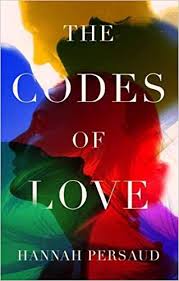
The Codes of Love by Hannah Persaud (2020)

My final read for April was one that I had been looking forward to, and while it was quite different to what I had imagined, it did not disappoint. My full review of Hannah Persaud’s intelligent and intricate novel is here. Persaud is definitely an author I will be looking out for in the future.

I’ve had another varied and exciting month of reading, which makes me very happy. I have also managed to catch up a bit and am back on track for my target of 100 books this year.

I’d love to know if you’ve read/are planning to read any of the books above, and of course, always, always, always hit me up with your reading recommendations. I have discovered so many fantastic authors since joining the bookish community on Twitter – I feel like I have discovered a not-so-secret treasure map!

Happy reading!

Review: The Codes of Love by Hannah Persaud (2020)

I have been keen to read this for a while, and was excited to finally embark upon it this month. It is a tricky one to review because the plot is full of unexpected twists and turns: the fewer spoilers the better, so I will keep this brief.

The novel is an exploration of relationships and marriage, and takes the form of chapters headed with “Rules For An Open Marriage”. Initially I anticipated a study of a mutually agreed open marriage and how it worked for one couple (no doubt with difficulties along the way), but the story that Persaud presents is far more complex and nuanced than this. I actually found it quite shocking to discover that only Emily had wanted an open marriage, and that Ryan’s agreement was not only reluctant but very nearly coerced. At first, this gave me much more sympathy for Ryan than for his wife, but gradually Emily’s reasons, both explicit and implied, became clearer to me, and I think by the end of the novel she was the character I felt I most understood.

Although I occasionally struggled with the fact that the characters are really quite unpleasant to each other, that reflects more on my naive desire to have a ‘good guy’ to root for than on the book itself. The lack of emotional warmth is deliberate, I think, showing how relationships are in many ways contracts, with some of the terms and conditions clearly understood and others inscrutable and changing over time. This is an intellectually rigorous novel, reminding me of Sally Rooney and Tessa Hadley in its almost forensic dissection of the ways we interact with those we claim to love. At one point, a character on the periphery of the story comments explicitly on that ‘fine line’ between love and hate; indeed, the antagonistic way in which couples often interact is uncomfortably highlighted in this novel. The edge of dislike in much of the dialogue cuts close to the bone, and makes for an unsettling read. Fans of cosy romantic tales will find no refuge here.

Persaud excels at setting, and the Welsh cottage which features heavily in the story is practically a character in its own right. I could clearly picture its sloping croft, the open fire, the newly made staircase, and the nearby mountain. The physical distance between the cottage and London provides an opportunity for the characters to almost become different people in different locations, which, without saying more, works very well for this story. She also writes well about physical injury (as a clumsy person myself, I get mildly annoyed when fictional characters seem to sail through life without so much as a stubbed toe) and at various points this awareness of physical frailty creates a thrilling sense of danger. Recklessness is an important theme here, and the isolation of the cottage is effective in upping the stakes.

The story is far from straightforward, and Persaud does a very good job of balancing its many strands and its non-linear chronology. She also weaves in elements that are surprising and tantalising – a hint of other genres such as horror and crime that deepen the flavour of the book and show the writer’s range. At times I wanted to follow these threads further, although I can see why they are left as suggestions here. I think there is a lot more to come from this author, and I am excited to read more of her work in the future.

The Codes of Love by Hannah Persaud is out now, published by Muswell Press.

COVER REVEAL: Midtown Huckster by Leopold Borstinski #MidtownHuckster @borstinski @damppebbles @DamppebblesBTs

I am very excited to be involved in the COVER REVEAL for the third book in Leopold Borstinski’s Alex Cohen series! Midtown Huckster will be published by Sobriety Press on 16th July 2020.

Without further ado…here it is!


Blurb
:

Can you keep your gelt and freedom when the cops have enough evidence to take you down? 

1930s Jewish gangster, Alex Cohen runs Murder Inc for Lucky Luciano. After the death of Prohibition he must find a new way to make money, just as the cops are baying at his heels. When Luciano goes down for racketeering, Alex loses his protection and is arrested for tax evasion-he must decide between saving his skin and ratting out his friends.If he chooses prison time then his gang will fall apart and he will end up with nothing. If he squeals then he will have to flee the city he loves and the family he once adored. What would you do in a world where nobody can be trusted and you have everything to lose?The third book in the Alex Cohen series is an historical noir novel, which plunges you deep into the early days of narcotics trafficking and the Jewish New York mob. Leopold Borstinski’s piercing crime fiction delivers a fix to every reader like heroin from a needle.

About Leopold Borstinski

Leopold Borstinski is an independent author whose past careers have included financial journalism, business management of financial software companies, consulting and product sales and marketing, as well as teaching.

There is nothing he likes better so he does as much nothing as he possibly can. He has travelled extensively in Europe and the US and has visited Asia on several occasions. Leopold holds a Philosophy degree and tries not to drop it too often.

He lives near London and is married with one wife, one child and no pets.

Social Media

Twitter: https://twitter.com/borstinski @borstinski

Facebook: https://www.facebook.com/LeoBorstinski/

Website: https://www.leopoldborstinski.com/

Instagram: https://www.instagram.com/borstinski/

Pre-order Links
Amazon UK: https://amzn.to/2xImJvr

Amazon US: https://amzn.to/3cAyjHY

Review: The Book of Shanghai, edited by Dai Congrong and Dr Jin Li (2020)

This anthology of ten short stories set in Shanghai is published by Comma Press as part of their Reading the City series. Many thanks to the publisher for sending me a free copy of the book in exchange for an honest review.

The Book of Shanghai opens with an insightful and informative introduction by Dr Jin Li, which provides a useful summary of Shanghai’s history and its literary heritage. It is clear that the stories chosen for this anthology have been carefully selected to showcase different aspects of the city and its writing scene, rather than simply because they are set in Shanghai. It feels purposeful and intelligent, and gives the reader confidence that they are in safe hands with these editors.

The ten stories in the collection range from quiet, domestic dramas to surreal, horror-tinged tales, and yet despite the range of styles, they work as a cohesive whole to build up a picture of a city lined with camphor and wutong trees, where apartment buildings force their inhabitants into close proximity with the neighbours. The habits of those neighbours are scrutinised with the full weight of societal expectation. Norms of tradition and routine are sometimes upheld and sometimes delightfully subverted; eccentricity does not go unnoticed in Shanghai, and when social rules are flouted, the community tuts in disapproval. There is a keen sense of observation in these stories, both in terms the beautifully detailed, well-translated prose, which creates a vivid imaginative cityscape for the reader, and in terms of the idea of being watched, which recurs in many of the stories.

All of the ten stories are worth reading, but my personal favourites were Wang Anyi’s ‘Ah Fang’s Lamp’, the perfect introductory story to life in the narrow alleyways between Shanghai apartment blocks; Teng Xiaolan’s ‘Woman Dancing Under the Stars’, a quietly tender account of the friendship between the newly married narrator and the elderly Ms Zhuge; Shen Dacheng’s quirky, intriguing, and ultimately shocking ‘The Novelist in the Attic’; and finally Cai Jun’s ‘Suzhou River’, a mesmerising, lyrical story that is like being inside someone else’s beautiful dream.

The book functions like a clever concept album, so that each distinct story somehow slots together with the others in surprising ways, to create an impression of a city that is more of a feeling than a concrete picture. It was a pleasure to be introduced to so many innovative and talented writers in one volume, and although I cannot speak to the accuracy of the translations, they seemed to me to be very skillfully done. I really enjoyed my time in ‘Shanghai’, and am looking forward to visiting other cities with Comma Press in the near future.

The Book Of Shanghai is out now, published by Comma Press.

Review: You Will Never Be Forgotten by Mary South (2020)

I haven’t read as many short story collections this year as I normally do, so I was excited to dive into this newly published book by Mary South. It didn’t take long before I realised that I had discovered a truly thrilling new voice in short fiction. The stories in this collection are unique, and it is hard to compare South with other writers; her style is highly original. However, the feeling of having stumbled across an author whose confidence and skill with the short story form is quite breath-taking reminded me of the first time I read work by Carmen Maria Machado, Leyna Krow, and Amie Barrodale.

South’s stories fall broadly under the umbrella of ‘speculative fiction’, positing a future not too far from our own, examining the ways in which scientific and technological advances might bring to the fore some of our darker impulses. In this way it reminded me a lot of the brilliant TV series Black Mirror: it seems to share the same awareness that it is not the technology itself that causes the damage, but our very natures. And like Black Mirror, each story has its own distinctive style, experimenting with form and language in a way that is incredibly exciting for the reader.

For me, a large part of the thrill of this collection was in the shocking revelations of the story worlds and the plots, so I don’t want to delve too deeply into the individual stories and ruin that aspect for anyone who might be tempted to read the book (which I strongly urge you to do). So I will just highlight some of the standout stories without giving too much away. Keith Prime, the opening story, is a surprisingly tender tale, with echoes of Kazuo Ishiguro. My favourite of the whole collection is Frequently Asked Questions About Your Craniotomy, which folds a narrative within its pamphlet-like structure in a formally inventive way that left me full of admiration. The title story is perhaps the most challenging read, a fierce and angry story that feels deeply confronting in a way that is both brave and necessary. It is not just thought-provoking but provocative, and, I felt, truly courageous. The final story in the collection, Not Setsuko, chilled my blood and held my attention captive almost against my will. It is absolutely shocking, but written with such nuance and grace that the full horror of it creeps up deliciously slowly.

These stories are uncomfortable, close to our present, revealing in ways we might prefer not to think about. But they are also incredibly intelligent, often funny, and full of a real joy in the gymnastic power of language. Above all, there is emotion here, and even in the darkest stories, a glimmer of warmth and hope. South has produced a body of stories that both demand and deserve our attention, for they hold up a mirror to our present and offer a glimpse of our possible future.

You Will Never Be Forgotten by Mary South is out now in the US, published by FSG Originals. It will be published by Picador in the UK in August.

Review: Leonard And Hungry Paul by Rónán Hession (2019)

I have been seeing this book all over Twitter, published by the fantastic Bluemoose Books, and it has been on my TBR list for a while. I always feel a slight trepidation about starting a book so many have loved; the main worry being that if I don’t like it, there is probably something wrong with me.

Luckily, I adored this book. It is a gorgeous, quiet story about ordinary people and what makes them special. Leonard and his friend Hungry Paul (the reason for this moniker is never explained, a touch that I really enjoyed) are both gentle, peaceful characters, united by their lack of ego and their ability to avoid getting caught up in the chaos of 21st century living. They are sufficiently different to provide a contrast, as Leonard gradual moves towards a more ‘conventional’ life while Hungry Paul’s unique take becomes more pronounced and profound. For me, Leonard was more relatable, but Hungry Paul was the beating heart of the story.

The book meanders gently along, stopping the reader in their tracks every so often to offer up a quiet truth. It is as if Hession is giving us a pause, a soft nudge, in which to say: look, this is just normal life, it is not full of drama and Big Events, but it is different for each of us in a million small ways. There is such a sense of kindness both in the characters and in the presentation of the story as a whole that I found myself very deeply moved, in ways I can’t quite articulate here. I also managed to time it perfectly and read it over the Easter weekend, which is when much of the plot takes place. I do like a bit of reading serendipity. Who doesn’t?

The last line of the book is just so utterly beautiful that I cried, and for the first time in quite a long time, they were happy tears.

I strongly recommend this book if you have not read it yet – it is full of the restorative human warmth we could all use right now.

(Note: Bluemoose Books @ofmooseandmen are currently collaborating with @LittleToller and author Ben Myers (@BenMyers1) – do follow them on Twitter to find out more of their exciting plans.)

Review: We Are Animals by Tim Ewins (2020)

I was expecting this novel to be fairly quirky, based on the fact that I have been greatly enjoying its author’s Twitter lockdown readings ‘in the style of’ such diverse characters/celebrities as Hulk Hogan, Gollum and Richard Ayoade (do follow @EwinsTim if you want some light relief at the moment – he is doing sterling work on that score). It is quite something to start a book and hear the author doing an impression of Christopher Walken in your head, I can tell you.

Indeed, in terms of delightful eccentricity, We Are Animals does not disappoint. Opening on Palolem Beach in Goa in 2016, we are introduced to a ‘moustache’, Jan, henceforth to be known as Manjan (to avoid confusion with Ladyjan, the woman for whom he is waiting). Manjan begins to tell his story to a young ‘vest’, Shakey, who is trying to entice beachgoers to a silent disco. A cow wanders along the beach; bubbler crabs roll balls of sand at the water’s edge (for that, we are told, is what bubbler crabs do.)

As Manjan and Shakey forge an acquaintance over red wine and vodka redbulls, Manjan’s incredible story is gradually revealed. The book has the chatty, informal tone of anecdote, with plenty of wry asides and a not-entirely-linear narrative that takes us on a madcap adventure all over the globe, from the wonderfully bizarre town of Fishton to not-quite-Norway, to Russia, Nepal, and of course, India. As the co-incidences mount up, it becomes clear that this is not just a funny book – it is a story with genuine heart. At times I was reminded of Jonas Jonasson’s novels, but in truth it’s hard to compare We Are Animals to other works: it is resolutely its own beast.

This book might not be to absolutely everyone’s taste; there is no denying the glorious silliness of many of its scenes, and those who seek dour realism in their fiction may find it too fanciful. But I absolutely loved its humour, its kindness, and its non-judgemental take on what it means to be a human animal. If you are looking for an uplifting read that will remind you of the wonders of the natural world and the importance of human connection, look no further.

We Are Animals is out now with Eye/Lightning Books , and is currently available for 99p on Amazon.

Review: The Truth Must Dazzle Gradually by Helen Cullen (2020)

“One Irish family. Three decades. One dazzling story.”

Helen Cullen’s second novel is a family drama unlike any I have read before. Although it opens with a shocking, tragic event, the main action of the story unfurls slowly and beautifully, with stunning attention to detail. The author carefully builds up a picture of the protagonists Murtagh and Maeve Moone, from their student days in Dublin to their family life on the small island of Inis Óg.

As we move back in time to Murtagh and Maeve’s first meeting and watch their blossoming relationship, it is clear that these are characters we can root for. There is a tendency in contemporary fiction to create deeply problematic, unlikeable protagonists-as-antagonists, and I have to admit, it was a refreshing change to find myself falling deeply in love with the characters right from the start. Murtagh and Maeve are not perfect by any means, but they are self-aware enough to own up to their shortcomings, and they are both empathetic, compassionate people. To read about such characters at this specific time is a balm. (I will add that by this point I was already sufficiently enamoured with Cullen’s writing to immediately order her first novel, The Lost Letters of William Woolf, which I am very much looking forward to.)

I was particularly struck with the young Maeve’s level of understanding of her mental illness. For me, it worked well that at the point we meet Maeve, alongside Murtagh, she already has a series of strategies to cope with her anxiety and depression, the “crow” that settles on her shoulder and which takes on increasing importance in the novel. That she initially hides it from Murtagh adds credibility; she has accepted her illness, but is unsure whether others will be able to. Murtagh’s reaction when he finally learns the truth is depicted with outstanding sensitivity and accuracy: he is sympathetic, of course, but he cannot fully comprehend what he is being told, and he is sure that it can be ‘fixed’. As someone who has had to attempt to explain my own depression and anxiety to well-meaning friends and family, my heart broke for Maeve on many occasions in this book. There is no universal experience, of course, something Maeve herself expresses much more eloquently than I could, but for me, her struggles resonated as deeply authentic.

The move to Inis Óg allows Cullen to fully stretch her descriptive wings, painting achingly beautiful word-portraits of the island and the house that Murtagh and Maeve move into, so that Murtagh can take up his apprenticeship under the island’s resident potter. Cullen’s prose sings, and both the island’s rugged beauty and the cottage’s transformation under the Moones’ stewardship give ample opportunity to display the very best of her poetic sentences.

This book is packed with the tender ephemera of life, the objects surrounding us which we imbue with meaning, from the records Maeve, an American, has her mother ship over, to the pots Murtagh lovingly creates, to the beloved leopard print coat of their youngest daughter. The importance of things, not as materialistic symbols but as deeply sentimental items, is something Cullen captures better than any novelist I have read in recent times. Sitting now in our homes, with our belongings linking us to memories of happier times, this feels all the more profound.

As their family grows, the cloud that Maeve’s mental fragility casts over them all is explored with exquisitely painful realism. Holidays and days out are put in jeopardy; the teenage children endure taunts about their “mad Ma” and Murtagh steadfastly believes that better days are ahead, that the strength of their love and their family bond will save everything. Alongside this, other characters come into their lives, inhabitants of and visitors to the island, and each one adds another layer of meaning to the story. The children, Nollaig, Mossy, Dillon and Sive, are each nuanced and well-developed characters, their distinct personalities carrying echoes of their parents, but newly-shaped. The Moone family is utterly absorbing, and I was sad to say goodbye to them at the end of the novel.

Several times in the book, the Japanese art of kintsugi – the process in which broken ceramics are repaired with gold or silver lacquer – is referenced, and I was completely overjoyed to see that Cullen seems to have the same association of this work with the perfect Leonard Cohen lyric that pictures of kintsugi always call to my mind: There is a crack in everything/That’s how the light gets in. I don’t think the author could have hit upon a more beautiful metaphor for what this book expresses. Indeed, Cullen’s novel is in itself a form of kintsugi – it broke my heart into pieces several times, but always made it whole again. The scars and cracks are where we find the beauty, and the dazzling truth.

Note: I received a proof copy from the author, to whom I offer many thanks. The above review is my own unbiased opinion.

The Truth Must Dazzle Gradually is available to pre-order from the following sites:

https://www.goldsborobooks.com/product/the-truth-must-dazzle-gradually

https://www.hive.co.uk/Product/Helen-Cullen/The-Truth-Must-Dazzle-Gradually/24290319

https://www.waterstones.com/book/the-truth-must-dazzle-gradually/helen-cullen//9780718189204